Domaine des Myosotis, Saint-Lambert-du-Lattay, Anjou Noir
Some domaines announce themselves loudly. Others simply arrive with the quiet confidence of people who know exactly why they’re there.
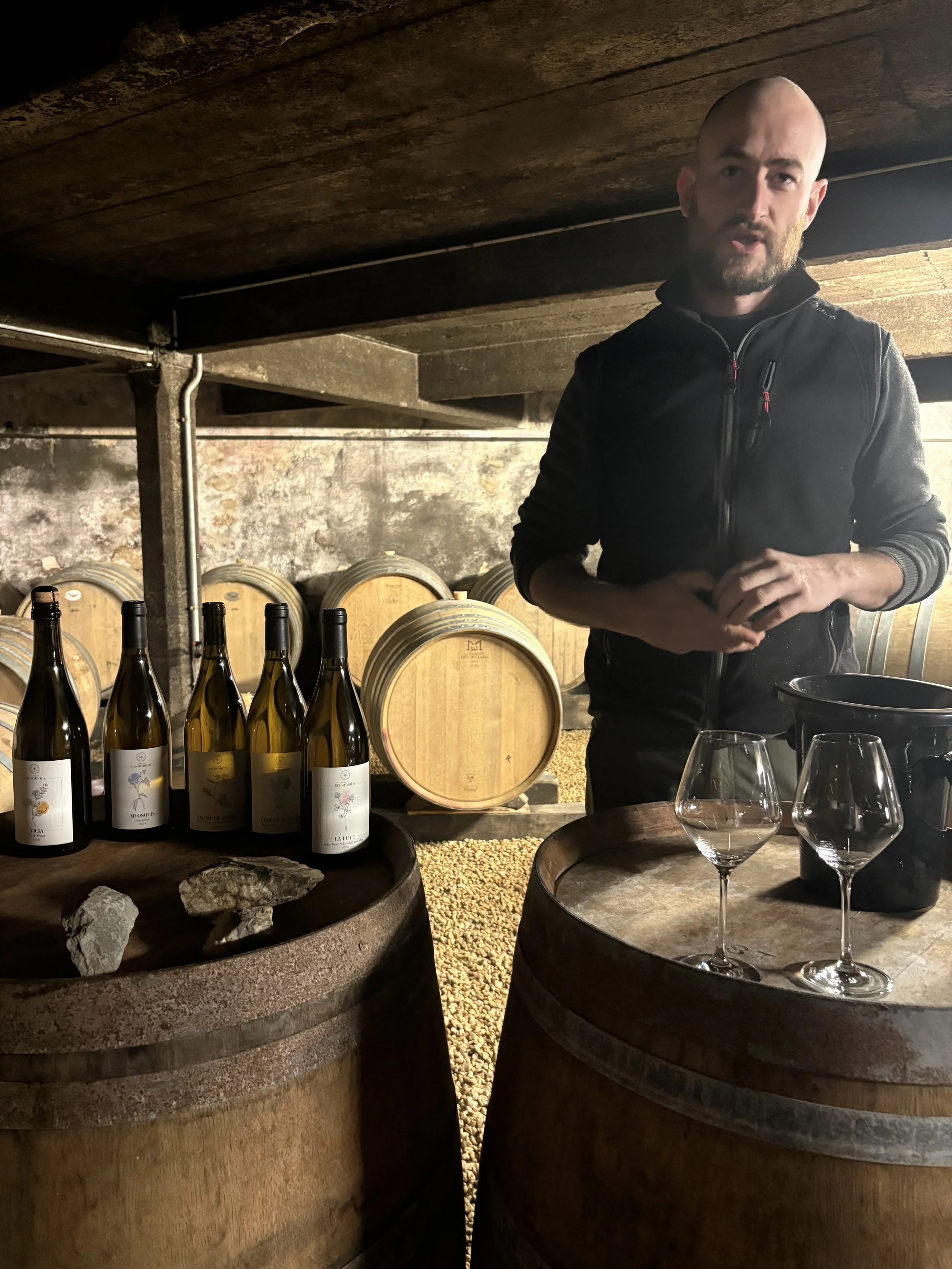
Domaine des Myosotis was founded by Justine Rivet and Romain Bourreau in Saint-Lambert-du-Lattay, in the heart of Anjou noir. Before launching the estate, the two trained with some of the Loire’s most serious growers — including Bonnet-Huteau in Muscadet and Thierry Germain in Saumur, whose wines I was proud to work with extensively at a previous employer. You can feel that lineage in the cellar work here: precision without rigidity, restraint without dogma.
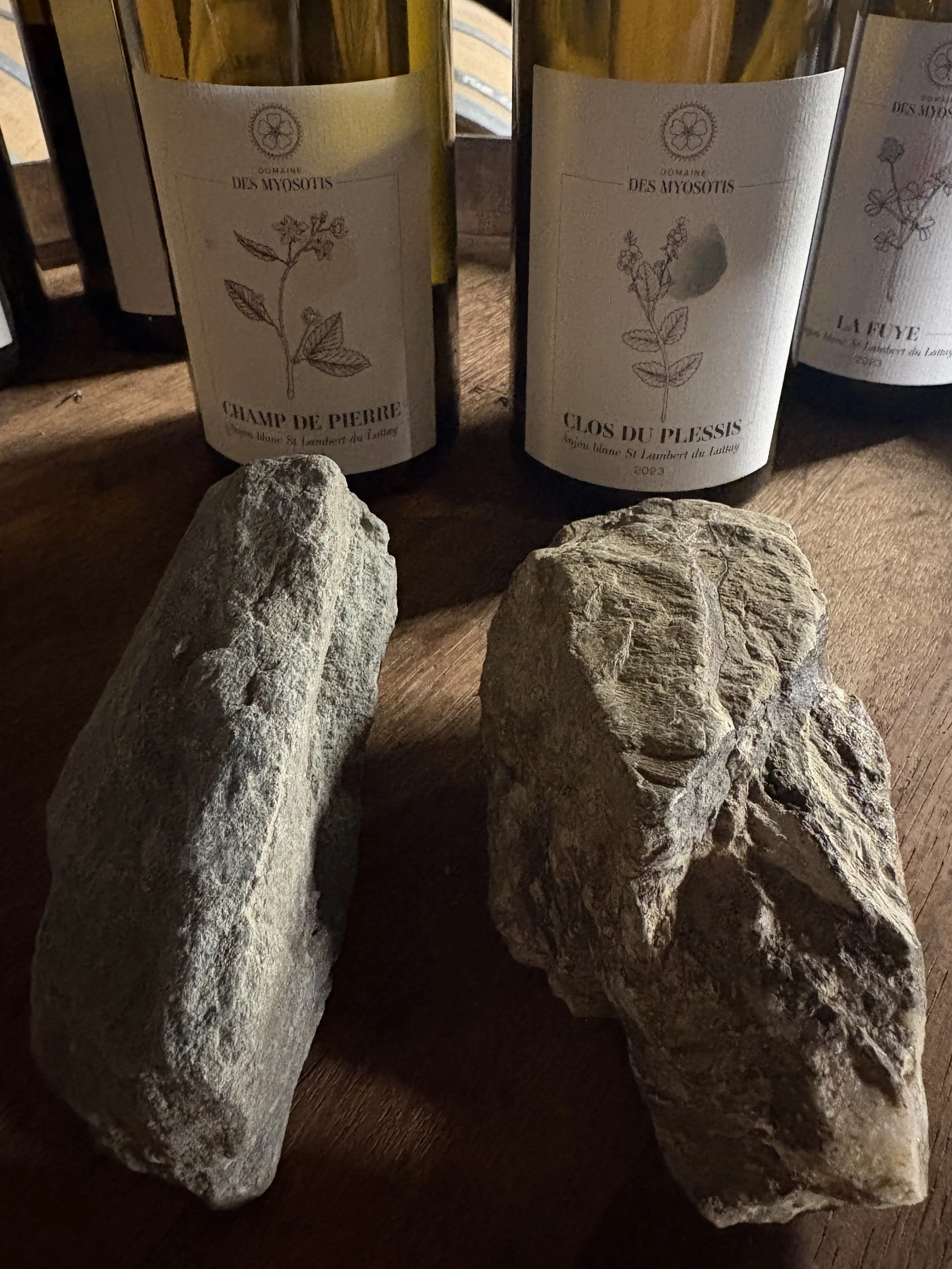
Drawn by Chenin Blanc and the fractured schist soils of Anjou, Justine and Romain settled here in 2022 and quickly established one of the region’s most exciting young domaines.
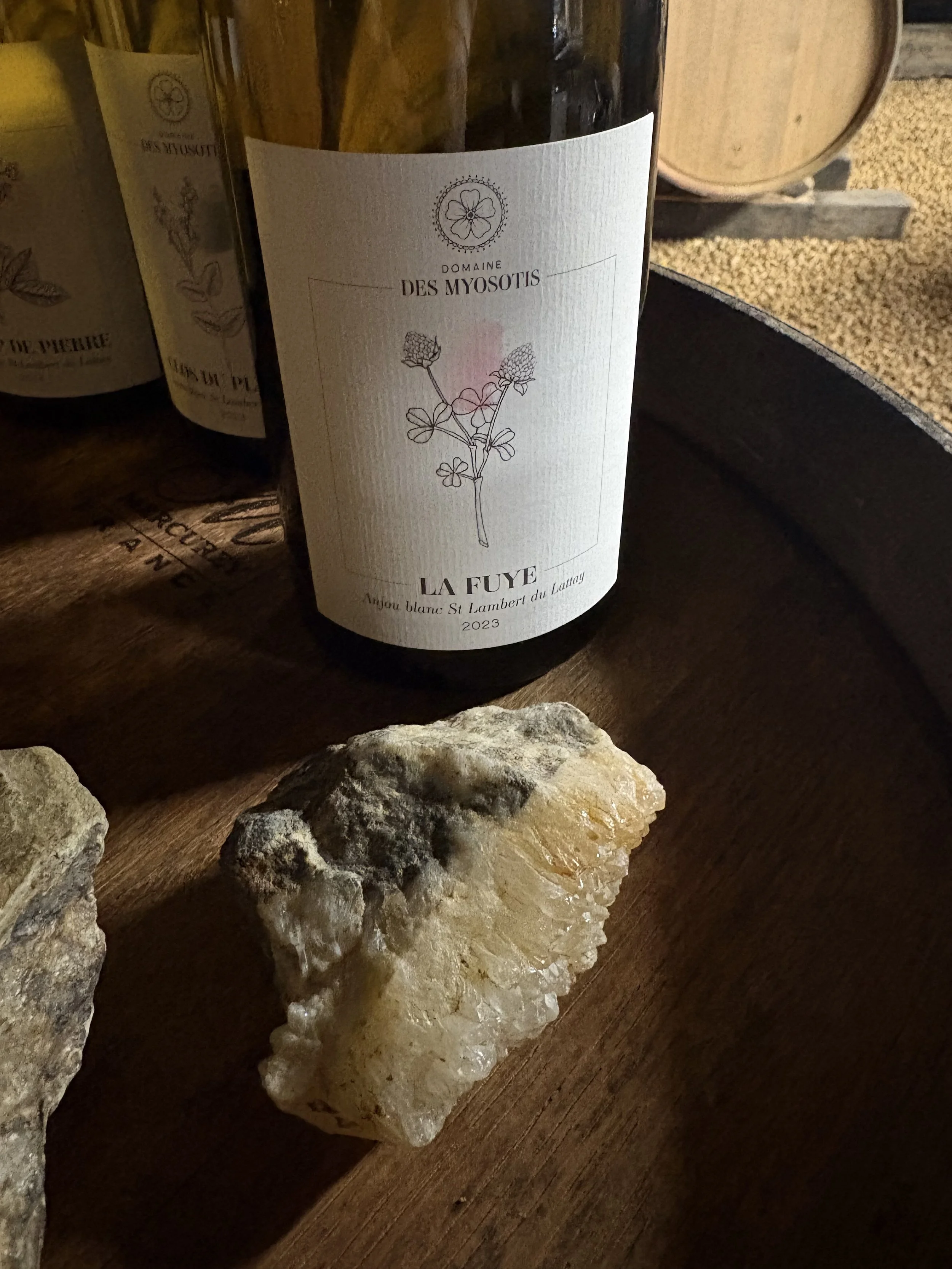
Today, the estate covers just under five hectares of vines planted primarily to Chenin Blanc, alongside smaller parcels of Melon de Bourgogne, Chardonnay, and Cabernet Franc. The vineyards are surrounded by hedgerows, woods, and forest, rooted in schist and clay-limestone soils that give the wines their signature tension and mineral depth.
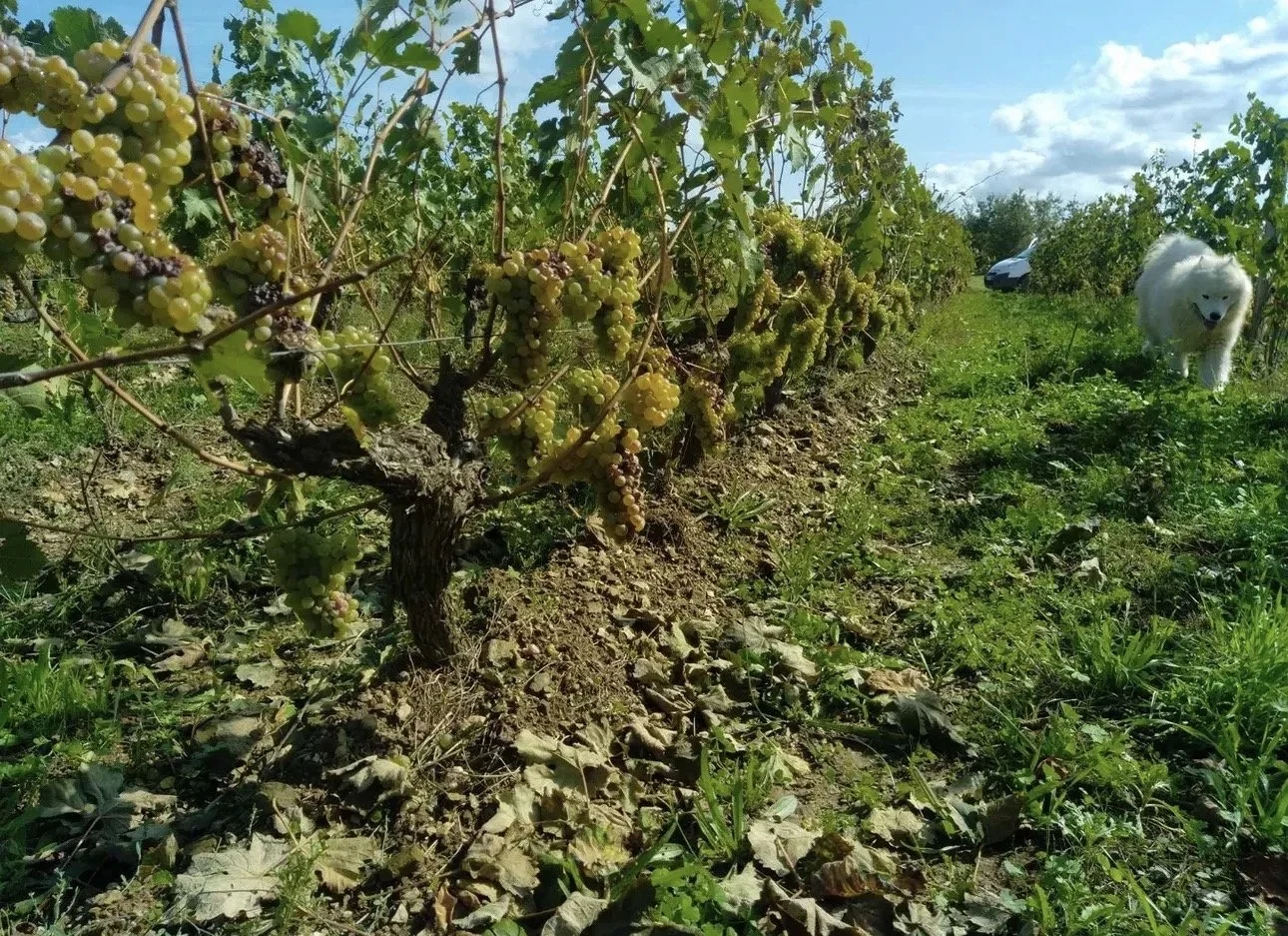
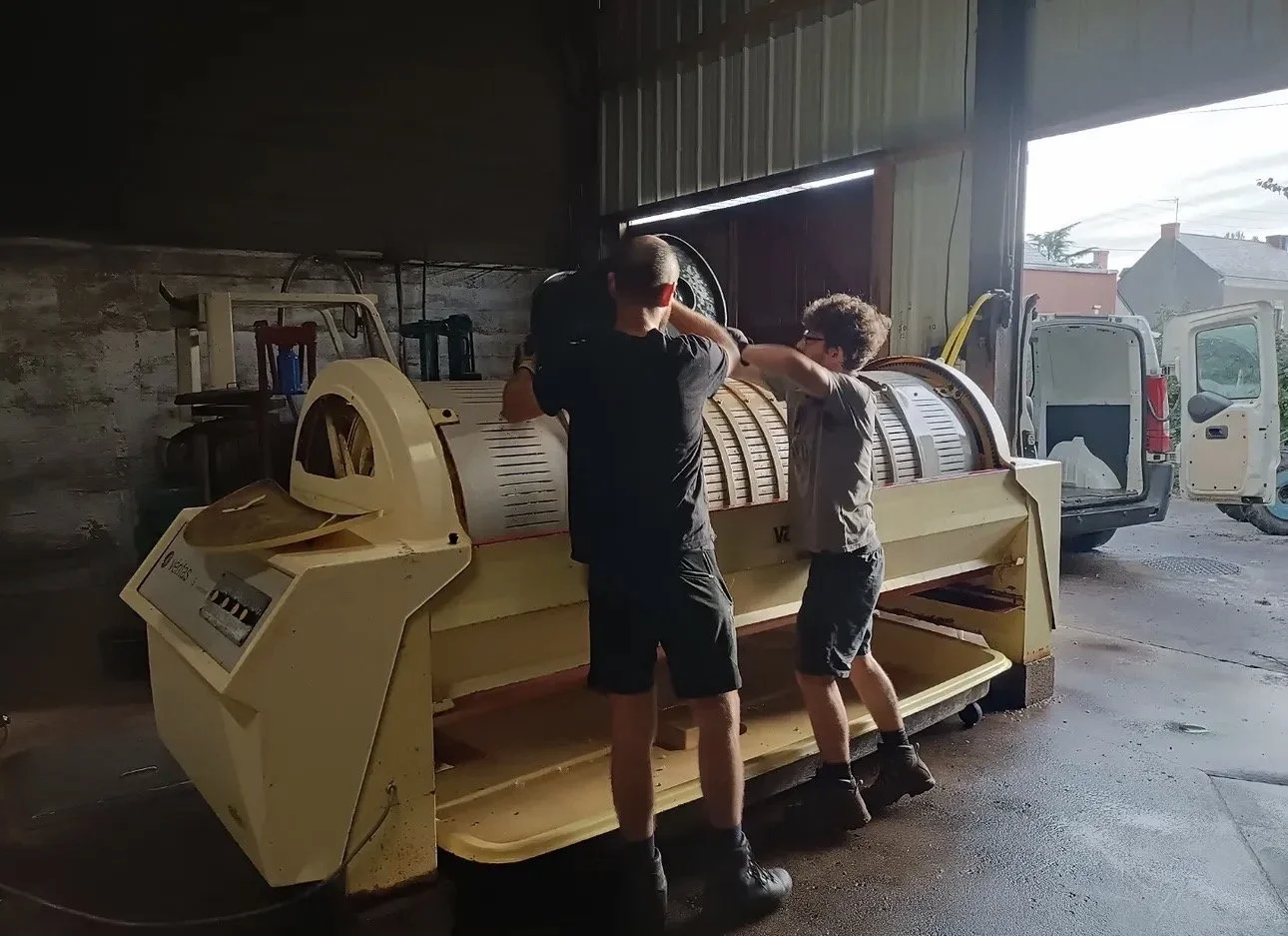
The farming is certified organic by Ecocert and emphasizes biodiversity and living soils. Harvests are entirely manual, fruit is gently pressed using a vertical press, and fermentations proceed without additives or manipulation. The only sulfur added comes at bottling, in extremely modest quantities — roughly 20 mg/L total SO₂.
But the wines succeed not because they are “minimal intervention.” They succeed because they are exacting.
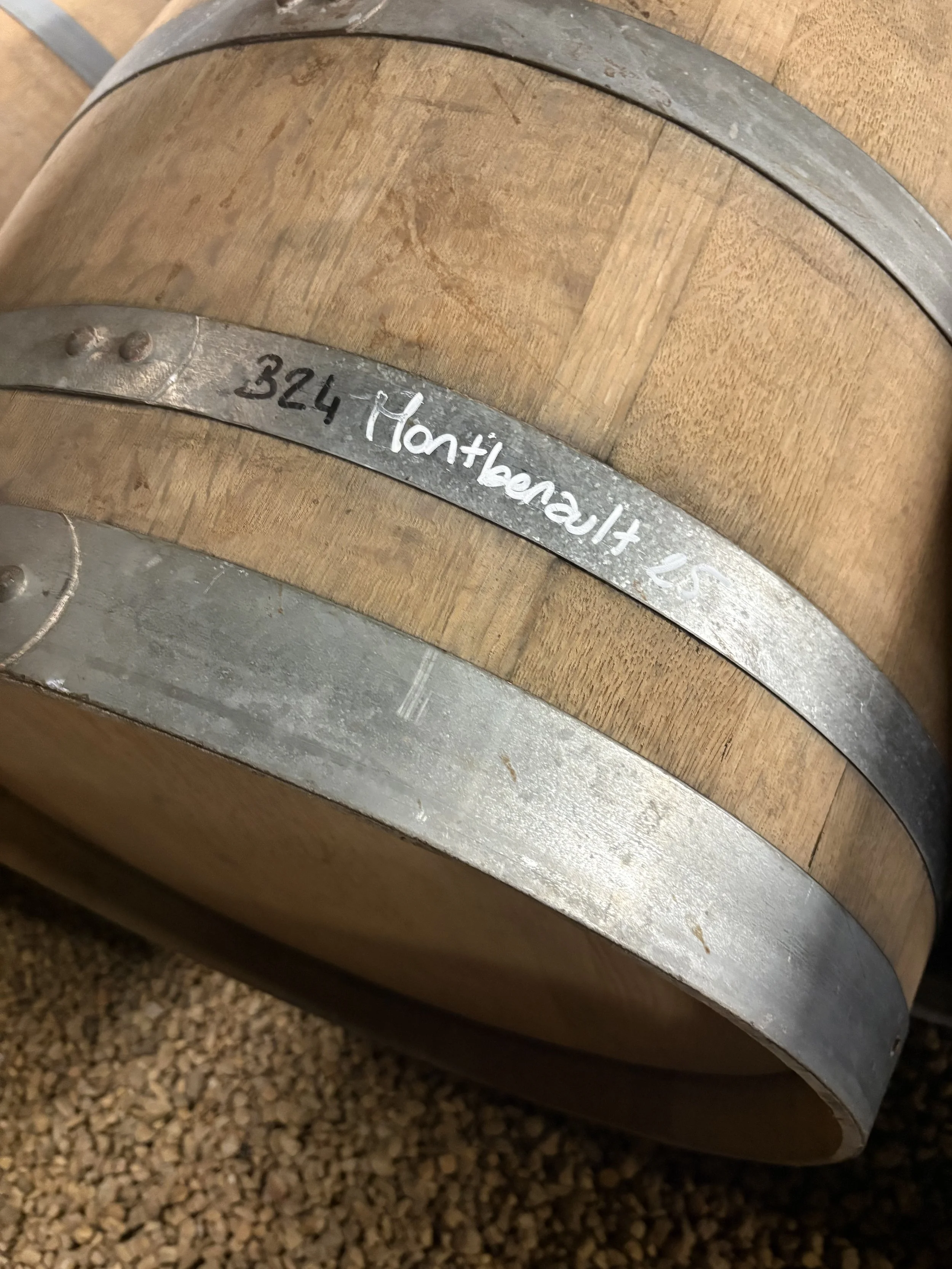
The Chenins possess the kind of balance that defines great Anjou noir: smoky minerality, salinity, and cut, paired with enough texture and breadth to make them deeply satisfying at the table. Barrel élevage brings shape and quiet structure without burying freshness or site expression.
Despite the domaine’s youth, the wines already feel remarkably complete — thoughtful, energetic Loire wines that speak more about geology and farming than cellar technique.
The kind of bottles that remind you why Chenin Blanc remains one of France’s great gastronomic grapes in the first place.
• Certified Organic (Ecocert)
• Manual Harvest, Vertical Pressing
• Native Fermentations, Barrel Élevage
• Unfiltered, Minimal Sulfur at Bottling (~20 mg/L total SO₂)
• Schist & Clay-Limestone Soils
Anjou Blanc “Myosotis” pdf tech sheet (2024)
Anjou Blanc “Champ de Pierre” pdf tech sheet (2024)
Anjou Blanc “Clos du Plessis” pdf tech sheet (2023)
Anjou Blanc “La Fuye” pdf tech sheet (2023)