

Introducing Le Clos de la Meslerie
— Peter Hahn’s Four-Hectare Testament to Land, Time, and Transformation
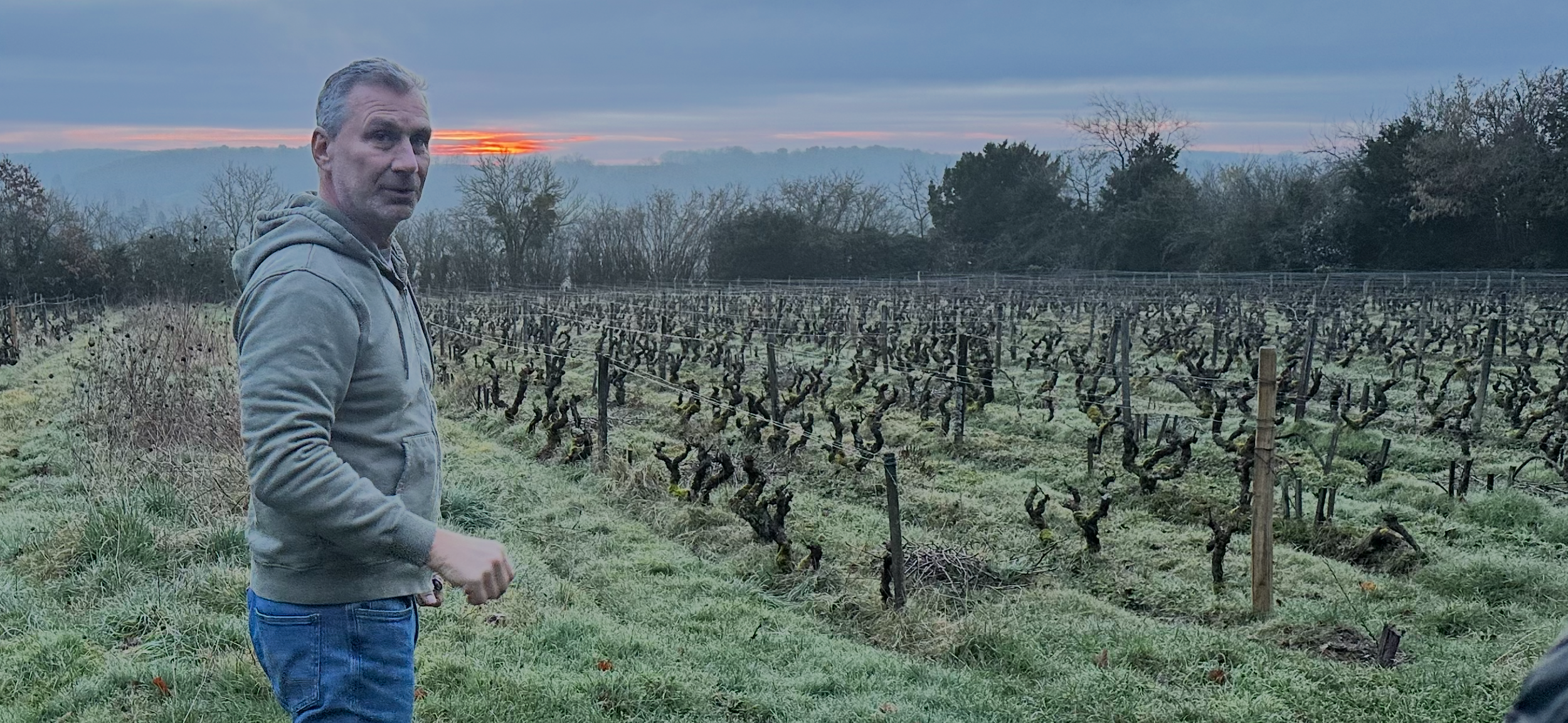
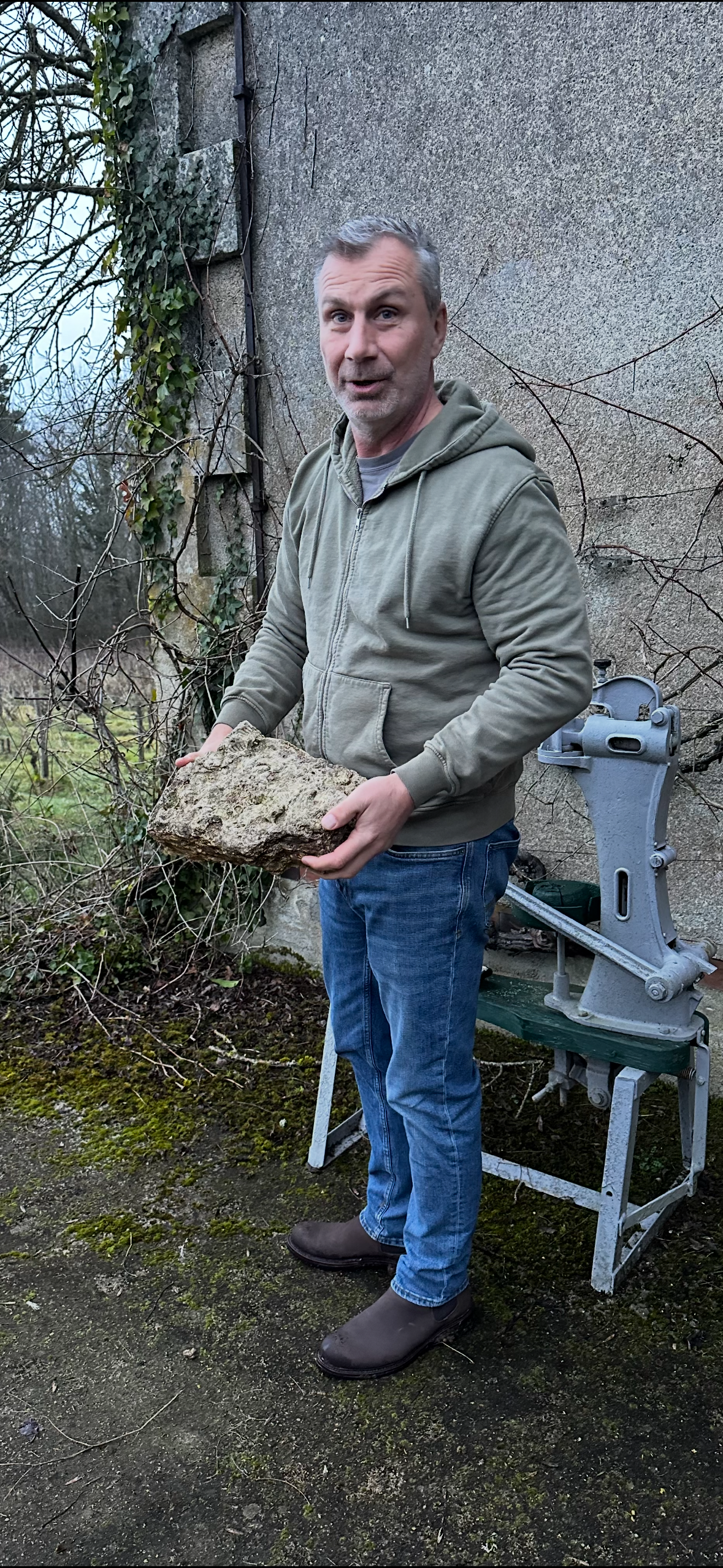
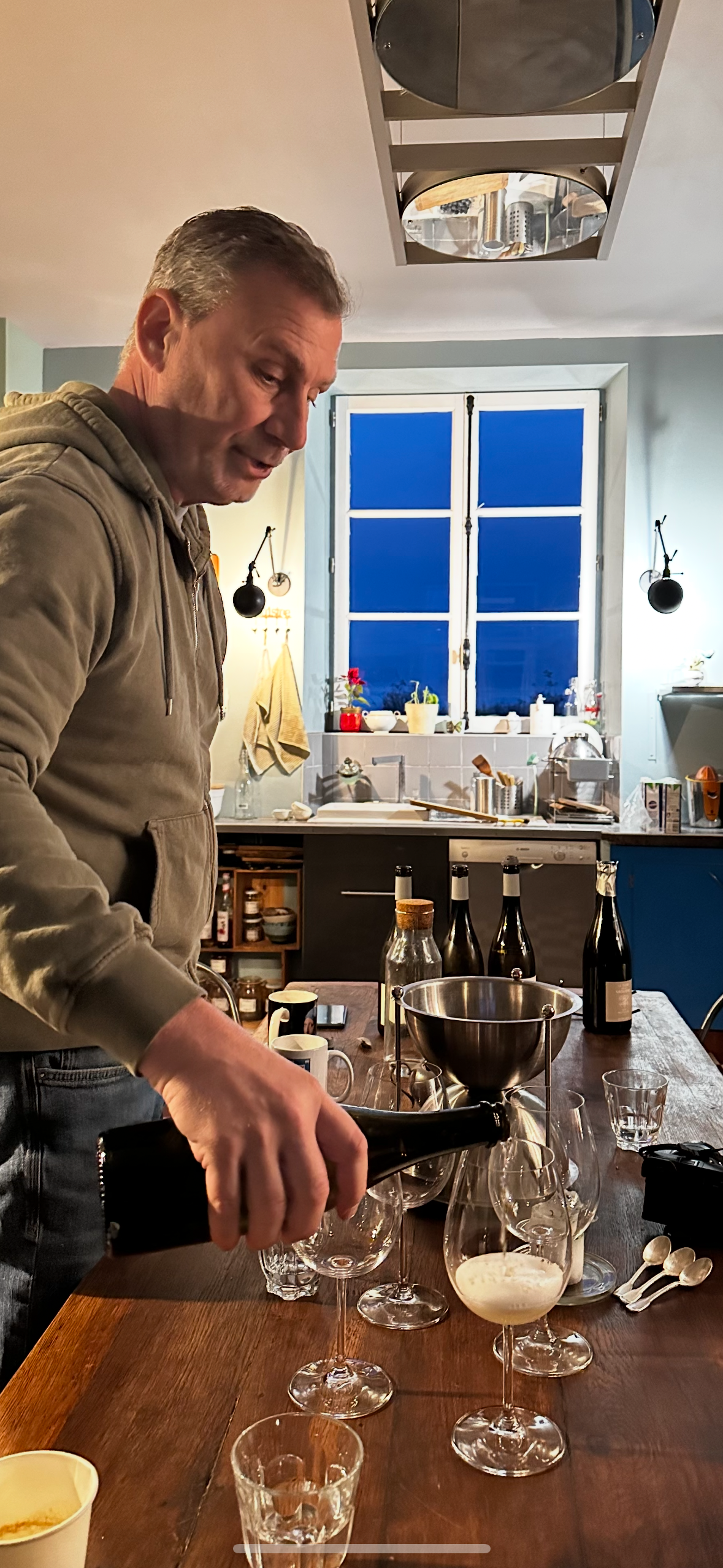
Some growers speak of terroir; a few actually live it. And then there is Peter Hahn, whose four hectares at Le Clos de la Meslerie in Vouvray are not simply farmed — they are inhabited in the deepest sense, physically, philosophically, and spiritually.
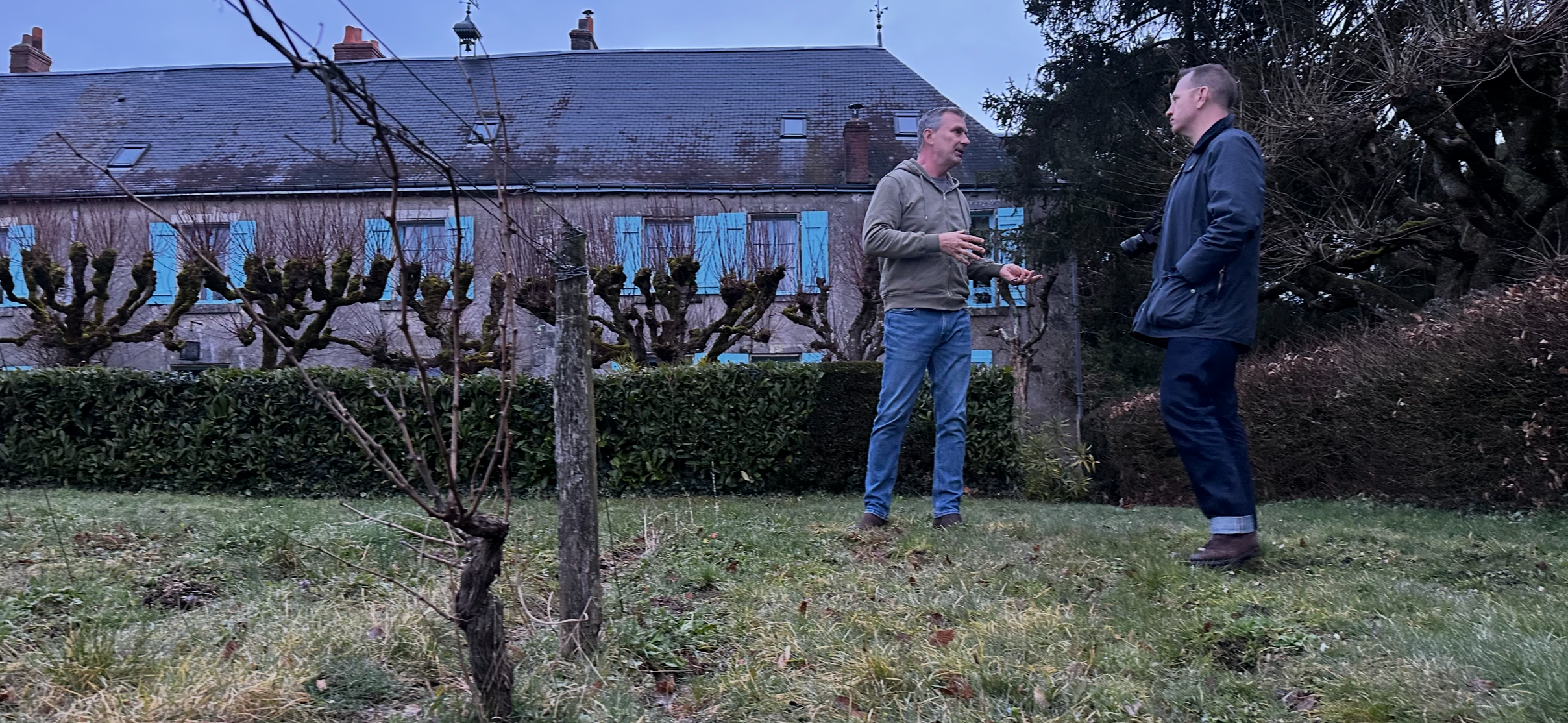
Peter arrived at this place in 2002 after what he calls “the collapse of the world” — a moment in a London taxi when he no longer recognized the man staring back at him. That moment of existential dislocation became the beginning of a pilgrimage toward land, seasons, embodiment, and meaning. “Any sort of meaningful life,” he writes, “was somehow linked to making a living from the land.” (Angels in the Cellar)
When he first saw the property — the centuries-old house, the old vines, the crumbling walls, the four hectares of Vouvray land — the feeling was immediate and undeniable:
“You and I can work together.”
From that point forward, Peter understood that he wasn’t merely moving house; he was stepping inside a lineage, becoming one more steward in a 400-year continuum of hands, ideas, storms, vintages, joys, doubts, and decisions. “Nobody is really the owner of this place,” he reflects. “Just a temporary steward.”
Peter’s Vouvray is Grown, Not Made
Over years of study and apprenticeship, Peter adopted a philosophy as old as wine itself, yet increasingly rare in the modern world: wine is grown, not made.
“Everything is in the grapes,” he writes. “Our wine is hand-made. It is the unique product of a place and of the people who nurture the vines and the wine.”
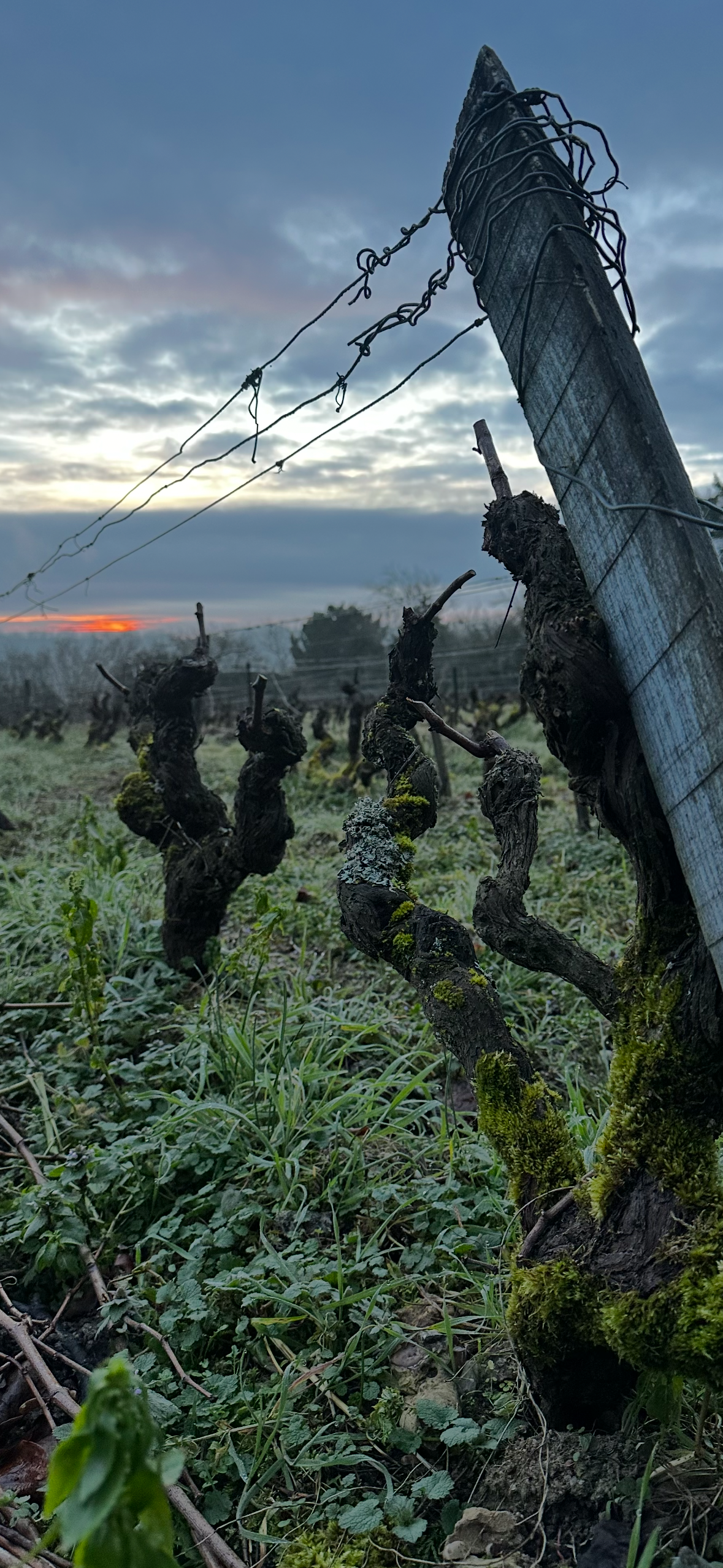
His vines — many of them 60–90 years old — are pruned entirely by hand, cane by cane, each vine approached as an individual being. “Every vine is different,” he notes. “They are similar, yes — but not the same.”
This devotion to nuance defines everything at Le Clos de la Meslerie:
No pre-pruning machines, because the soil must not be compacted.
No electric secateurs, because the hand must feel the plant’s resistance.
No shortcuts, because technology’s “imperceptible losses” are rarely worth its gains.
This is viticulture conducted at the speed of the seasons, not at the speed of efficiency.
Fermentation as Listening
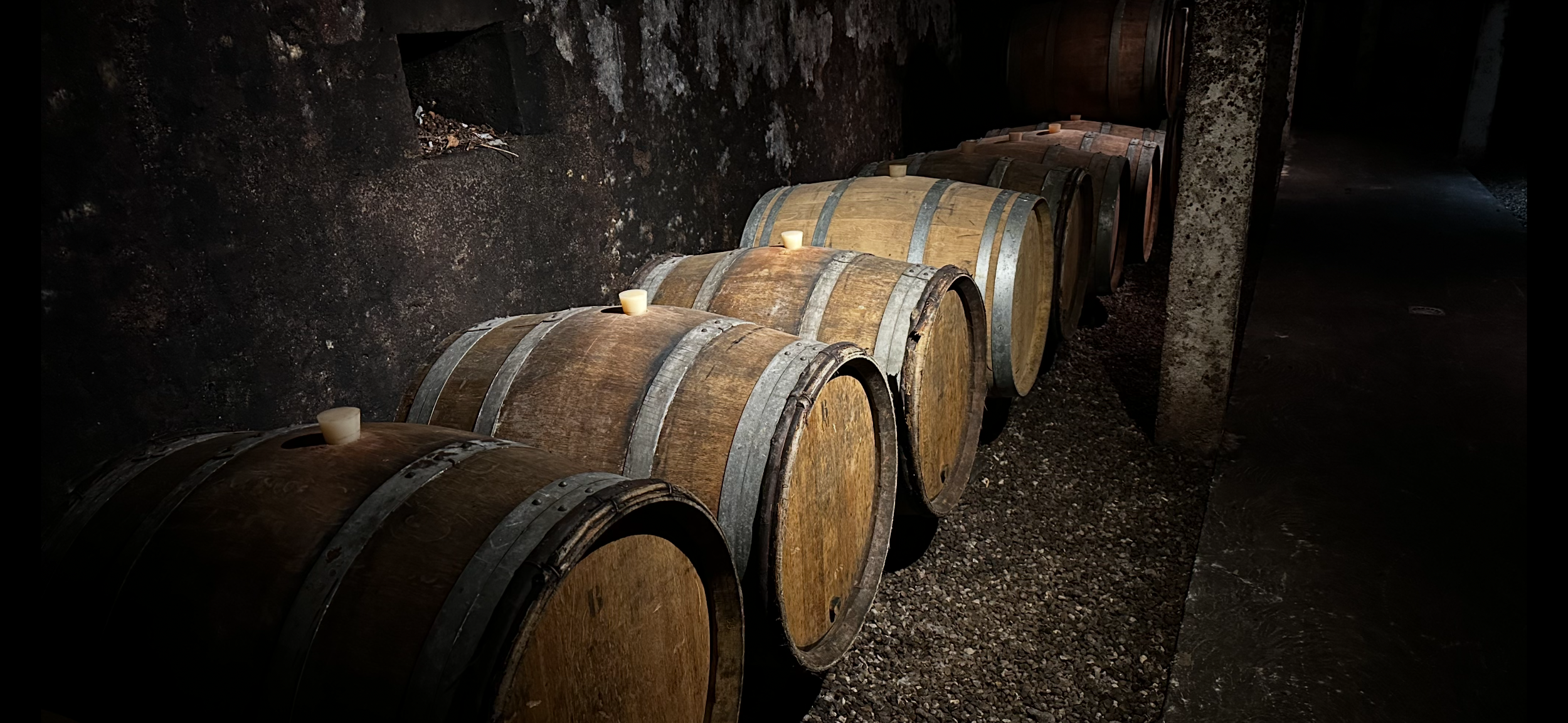
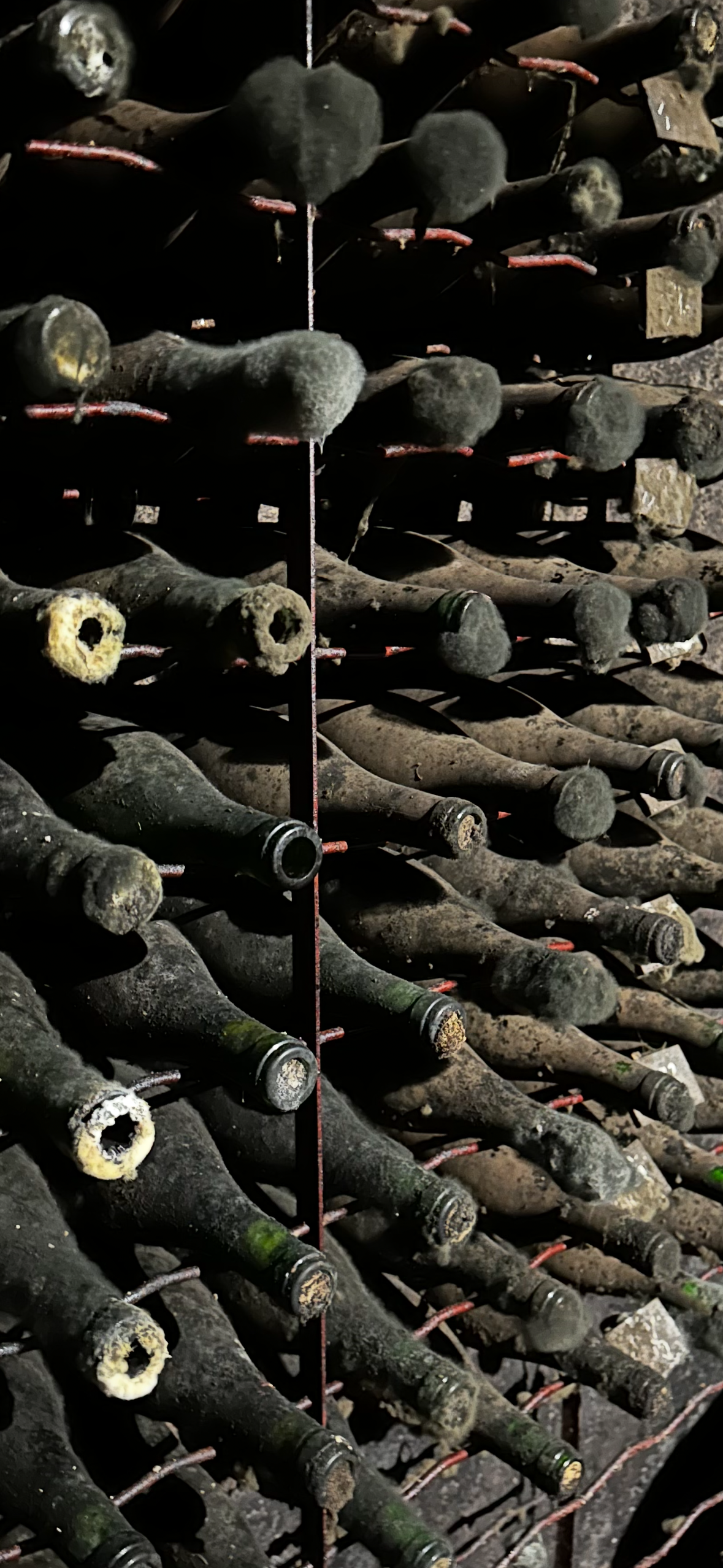
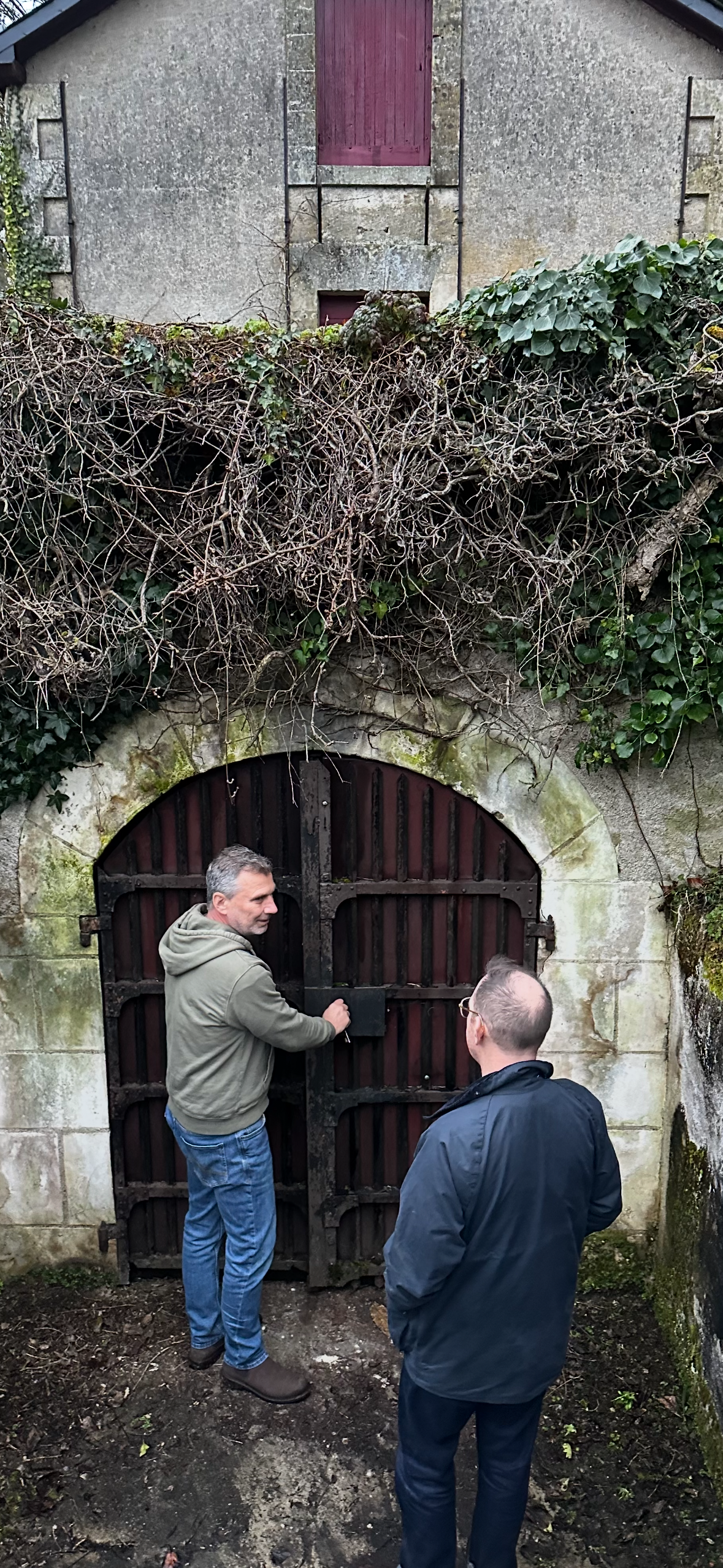
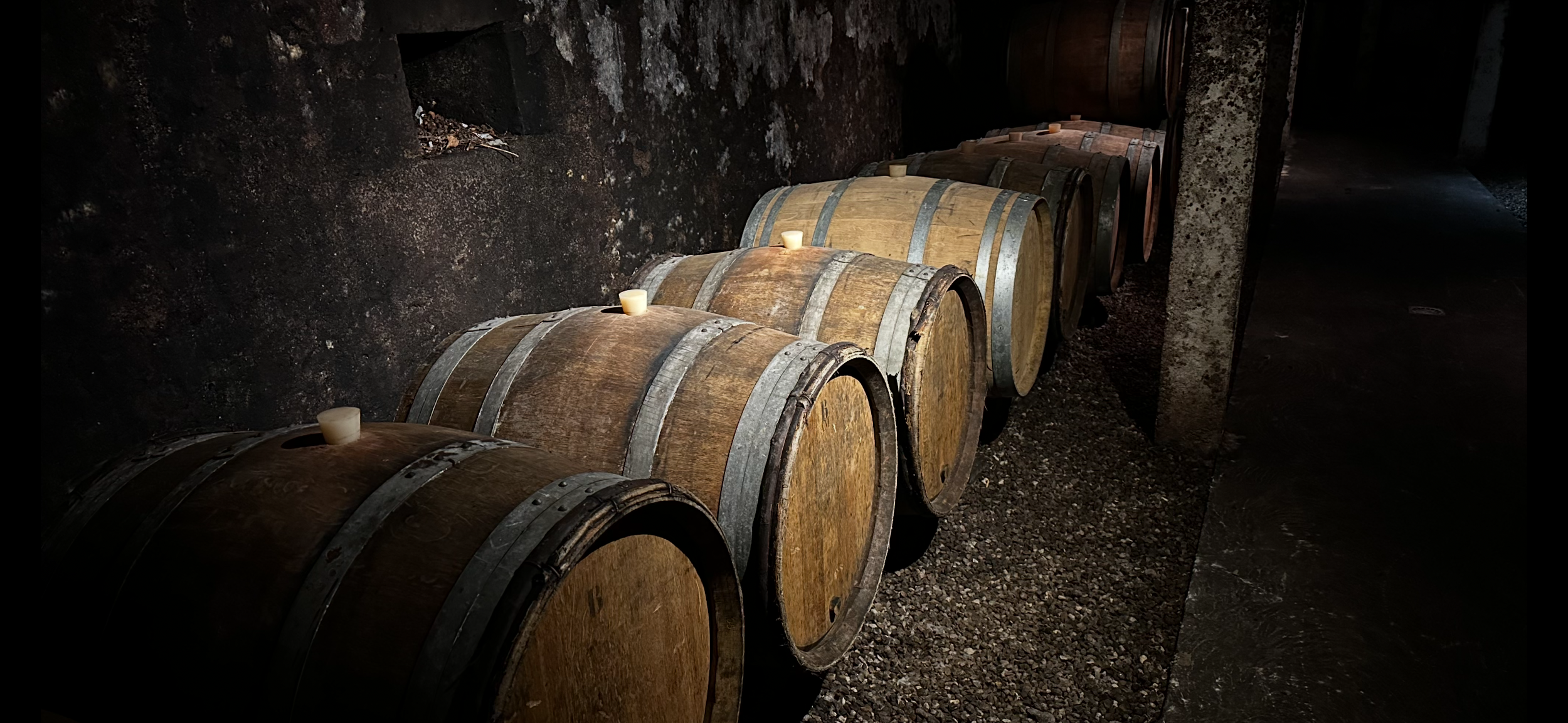
In the cellar — a cool, underground chamber carved into the hilltop — Peter practices a form of winemaking that is almost meditative. Fermentations proceed at their own pace, often for four to six months, guided only by gravity, temperature, and his intuition. At times, he presses his ear to the barrel to hear whether the ferment is still alive — a gesture that feels liturgical.
If each vintage in Vouvray can be dry, tendre, or sweet, Peter refuses to impose intention. “I let the wine decide what it wants to be.”
There is no manipulation — just accompaniment.
Even music plays a role: each vintage is paired with a single musical work played in the cellar as the wines rest and clarify, a kind of atmospheric companionship for the forming wine.
A Life Reshaped by Land
One of the beautiful revelations of Peter’s book, Angels in the Cellar, is how his identity and inner life have been shaped — literally and metaphorically — by the land.
From pruning through hailstorms to the ritual of baking bread before a winter’s day in the vines, to the sensation of seasons becoming allies rather than inconveniences, the book reveals a man who has rebuilt a life around presence, embodiment, and attention.
“If you are not here, now, you are nowhere,” he writes, having learned this truth not from philosophy but from 24,000 vines demanding his full presence.
The Wines
Peter’s wines — often a single cuvée of Chenin Blanc — express exactly what he lives:
clarity, honesty, luminosity, and a sense of time slowed down.
They are not designed. They are revealed.
In years when nature is generous, he produces a sparkling Chenin of remarkable mineral precision, but most vintages yield a single still wine — a distillation of the year, the land, and the man who listened to them.
Vouvray Sec 2023 (pdf tech sheet)
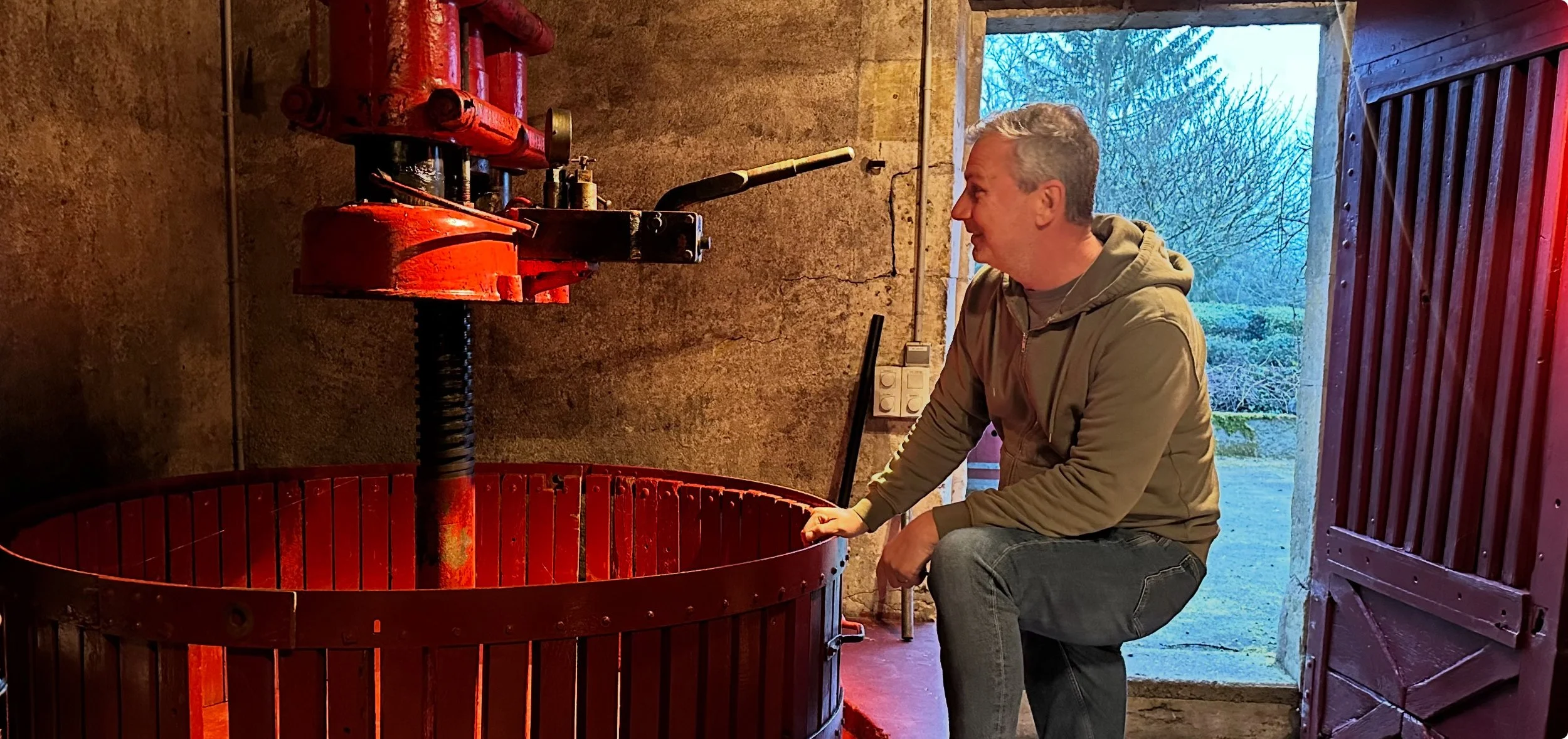
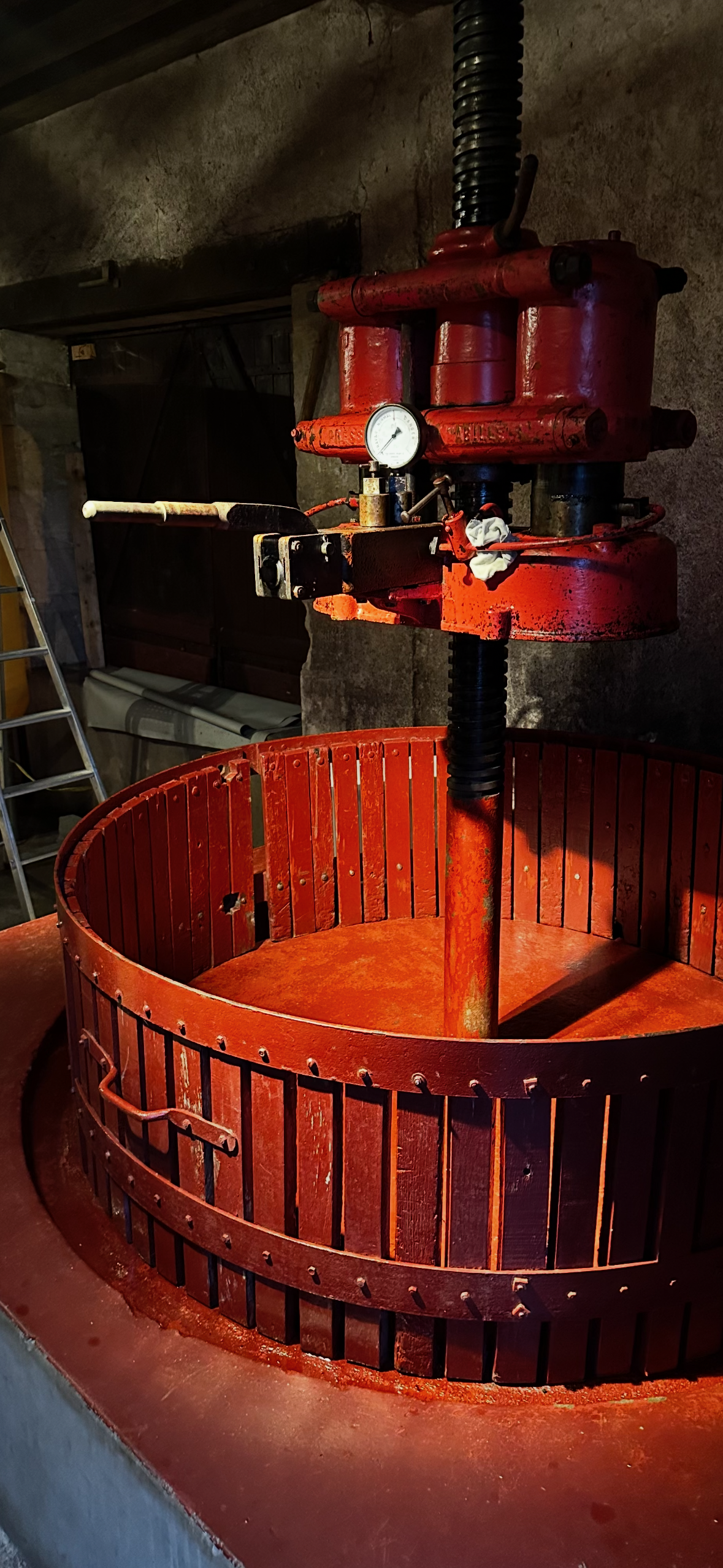
The 2023 Sec comes from Peter Hahn’s four parcels of old-vine Chenin, hand-harvested and pressed slowly in the estate’s century-old basket press. Fermented with native yeasts and aged in neutral oak in the underground cellar, the wine rests for a full year before bottling. A pure, mineral-driven expression of Meslerie’s hilltop terroir: tensile acidity, white orchard fruit, and a long, saline finish.
Vouvray Sec “Tendre” 2022 (pdf tech sheet)
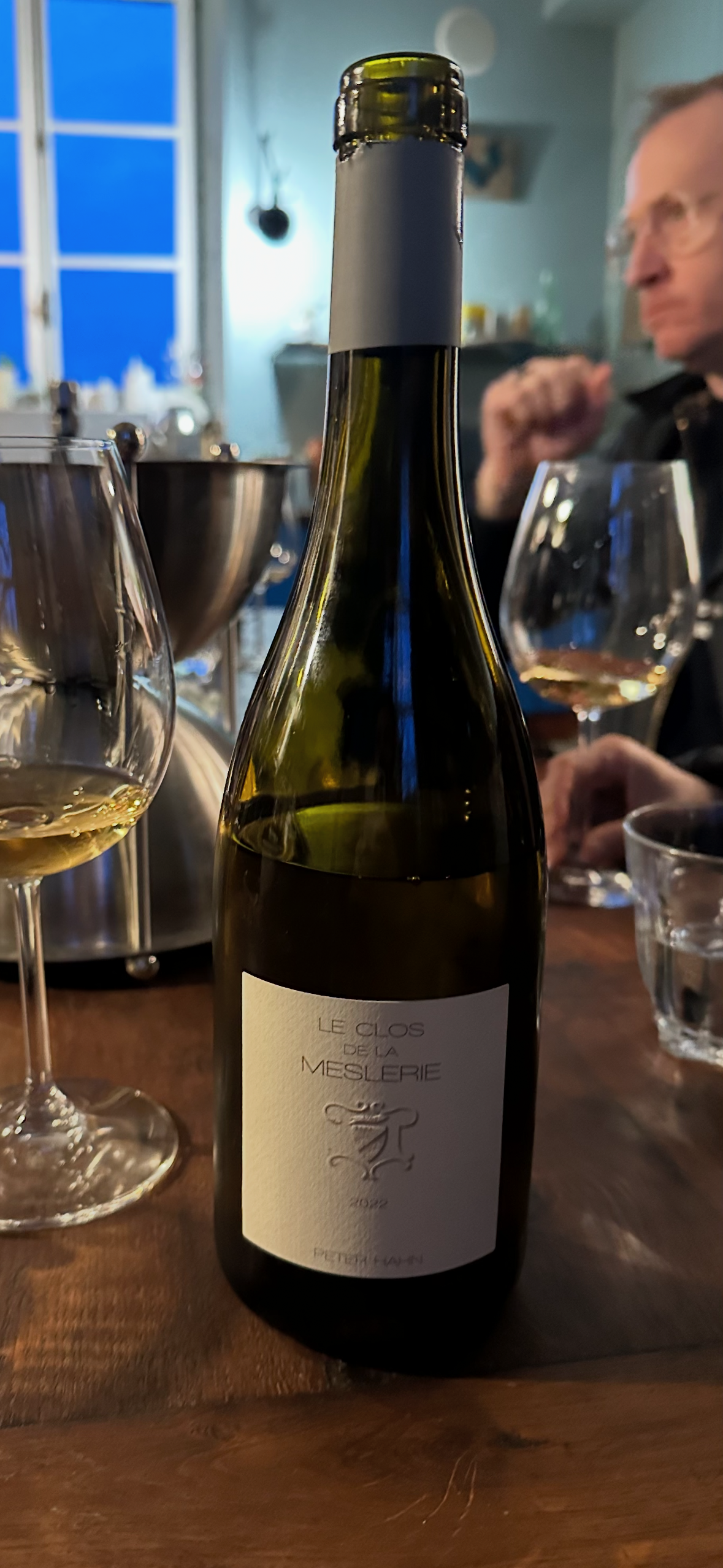
In 2022, the natural fermentations yielded a wine with a touch of residual sugar — a hallmark of Vouvray’s traditional tendre style. Never forced or corrected, the wine’s balance comes entirely from the fruit of the vintage. Old-vine Chenin, whole-cluster pressed, slowly fermented in barrel, and aged a year before blending. Silky stone fruit, beeswax, and vivid acidity in effortless harmony.
Vouvray Tendre 2018 (pdf tech sheet)
A late-release from Peter’s cellar, the 2018 Tendre shows the depth that Meslerie Chenin gains with patient aging. From a ripe vintage and long, natural fermentation, this cuvée offers layered texture, golden orchard fruit, and the subtle sweetness that defines the domaine’s most graceful wines. A benchmark example of Vouvray’s off-dry tradition, bottled after extended maturation.
Vouvray Brut Nature 2022 (pdf tech sheet)
In years with sufficient fruit, Peter produces a Brut Nature from the estate’s old-vine Chenin — always without dosage and always in very small quantities. The 2022 was harvested by hand, gently pressed, fermented with native yeasts, and aged before a traditional-method secondary fermentation. Razor-fine bubbles, chalky minerality, and a long, driving finish: a sparkling Chenin of remarkable precision.
Vouvray Brut Nature 2022 – Magnums (3-pack) (pdf tech sheet)
Magnums of the 2022 Brut Nature show the cuvée at its most expressive, with extended aging on lees amplifying its depth and structure. Zero dosage, estate-grown Chenin, and meticulous handwork at every step. Only a limited number were produced — a rare chance to experience Clos de la Meslerie’s sparkling wine in its most ageworthy format.
A France+Western Grower Unlike Any Other
Introducing Peter Hahn into France+Western is less an addition to a portfolio and more the welcoming of a worldview:
a belief in land over machinery, seasons over schedules, listening over forcing, stewardship over ownership, and the idea — radical in its simplicity — that wine should express the deep truth of a place.
Le Clos de la Meslerie is four hectares, but also four centuries.
Peter is the latest in the story, and through his wines, that story travels.
We are profoundly honored to share them.
Enjoy this kind of story?
France+Western explores the outer world of land, craft, and the people behind the wine. My Substack explores the inner world — the landscape of desire, attention, and meaning. Both are ways of learning to taste life more fully.